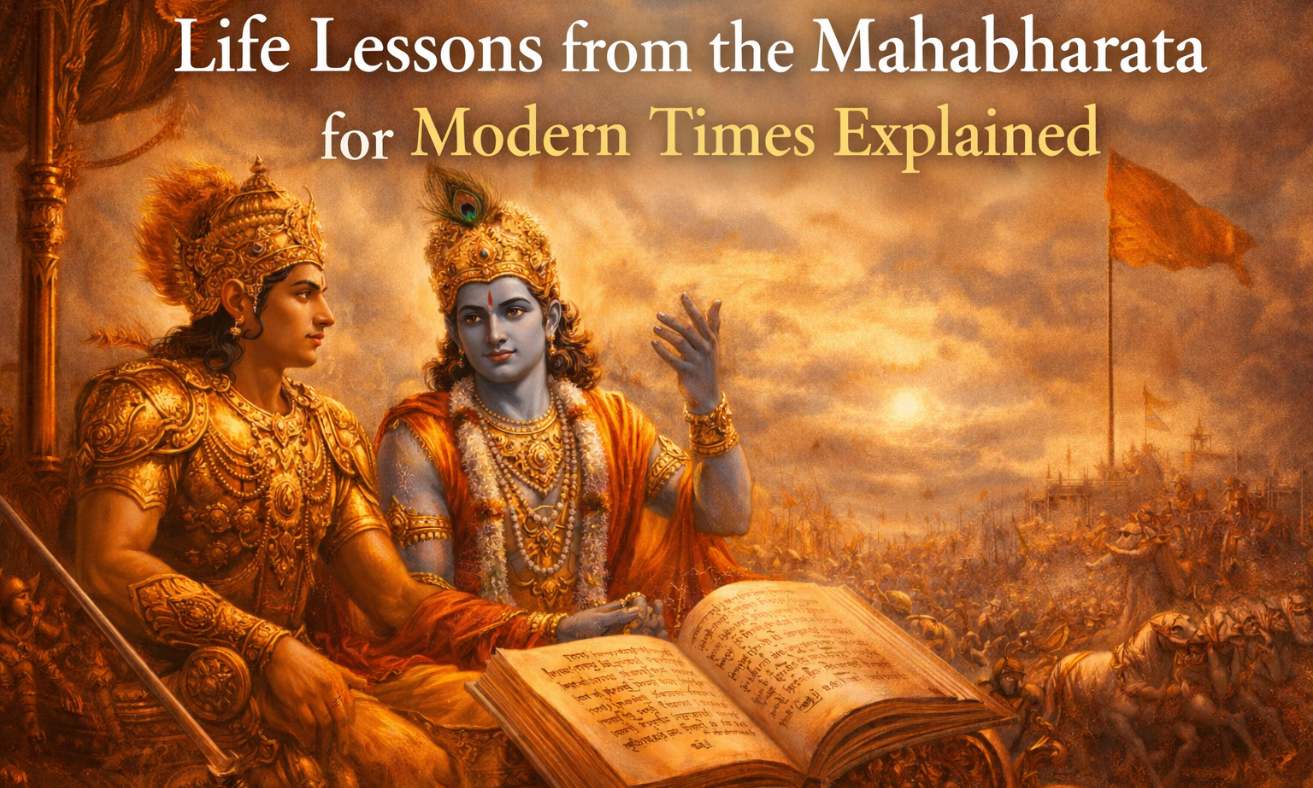
Life Lessons from the Mahabharata for Modern Times
The Mahabharata is not merely an ancient Indian epic; it is a timeless manual on how human beings think, act, fail, learn, and grow. Even today, readers who explore authentic editions from trusted sources such as the ISKCON Mayapur Store discover that the Mahabharata speaks directly to modern struggles—stress, ethical confusion, ambition, relationships, leadership, and inner peace. Though composed thousands of years ago, its lessons remain strikingly relevant in a fast-paced, competitive, and emotionally complex world.
This article explores the most important life lessons from the Mahabharata and explains how they apply meaningfully to modern personal, professional, and social life.
Why the Mahabharata Still Matters Today
The Mahabharata is often described as itihasa—history with purpose. Unlike texts that offer abstract philosophy alone, the Mahabharata teaches through real human situations: conflict, temptation, loyalty, betrayal, fear, and moral doubt.
Modern society faces similar dilemmas:
- Career vs. ethics
- Success vs. integrity
- Desire vs. responsibility
- Power vs. compassion
The Mahabharata does not offer simplistic answers. Instead, it teaches how to think, not merely what to think.
Lesson 1: Dharma Is Situational, Not Mechanical
One of the most important lessons of the Mahabharata is that dharma (righteous duty) is complex. There is no single rule that applies to every situation.
Characters like Yudhishthira, Bhishma, and Arjuna struggle because they try to apply rigid moral rules to fluid human realities. The epic teaches that righteousness requires:
- Awareness
- Context
- Responsibility
- Inner honesty
Modern Application
In modern life, ethical decisions at work, in family, or in leadership roles cannot be solved by rigid formulas. The Mahabharata encourages ethical intelligence, not blind rule-following.
Lesson 2: Silence in the Face of Injustice Is Also Adharma
Many disasters in the Mahabharata occur not because of direct wrongdoing, but because good people remain silent.
Elders in the royal court knew the dice game was unjust. They knew Draupadi’s humiliation was wrong. Yet their silence allowed injustice to flourish.
Modern Application
Remaining neutral during injustice—whether in workplaces, society, or families—often enables harm. The Mahabharata teaches that moral responsibility includes speaking up, even when it is uncomfortable.
READ ALSO:- Garga Samhita and Vaishnava Text
Lesson 3: Ego Is the Root of Destruction
Duryodhana’s downfall was not caused by lack of intelligence or courage, but by unchecked ego. His refusal to compromise, apologize, or reflect led to total destruction.
The Mahabharata repeatedly shows that ego blinds wisdom and destroys relationships.
Modern Application
In modern careers, businesses, and personal relationships, ego often causes:
- Burned bridges
- Failed negotiations
- Emotional isolation
True strength lies in humility and self-awareness.
Lesson 4: Success Without Ethics Leads to Emptiness
The Mahabharata does not glorify victory at any cost. Even the Pandavas, after winning the war, feel deep sorrow and guilt.
Victory obtained through unethical means brings psychological and spiritual suffering.
Modern Application
Material success without ethical grounding often results in stress, anxiety, and dissatisfaction. The Mahabharata teaches that how success is achieved matters more than success itself.
Lesson 5: Duty Must Be Performed Without Attachment
Through the Bhagavad Gita, the Mahabharata presents the concept of detached responsibility. Arjuna is instructed to perform his duty without obsession over results.
Modern Application
In modern life, over-attachment to outcomes causes:
- Burnout
- Fear of failure
- Constant anxiety
The Mahabharata teaches balance: work sincerely, but do not let results define your self-worth.
Lesson 6: Knowledge Without Character Is Dangerous
Many powerful warriors in the Mahabharata possessed great knowledge and skill but lacked moral restraint. Their fall shows that intelligence without character becomes destructive.
Modern Application
Education and expertise must be balanced with ethics. Modern scandals across industries reflect this timeless warning.
Lesson 7: True Leadership Requires Compassion
The Mahabharata contrasts different leadership styles. Duryodhana ruled through fear and entitlement, while Yudhishthira ruled with responsibility and compassion.
Modern Application
Modern leaders—managers, entrepreneurs, policymakers—who lead with empathy build long-term trust and stability. Authority without compassion eventually collapses.
Lesson 8: Relationships Require Boundaries and Honesty
The epic highlights complex relationships between siblings, spouses, teachers, and friends. Many tragedies arise from:
- Poor communication
- Hidden resentment
- Unspoken expectations
Modern Application
Healthy relationships require honesty, emotional intelligence, and boundaries—values clearly illustrated in the Mahabharata’s family dynamics.
Lesson 9: Destiny Works Through Human Choices
The Mahabharata acknowledges destiny but never excuses poor decisions. Fate operates through human action, not instead of it.
Modern Application
Blaming fate for failures prevents growth. The Mahabharata encourages accountability and conscious decision-making.
Lesson 10: Inner Strength Is More Important Than Outer Power
Characters with immense physical strength fall, while those with inner discipline endure. True power, the epic teaches, comes from:
- Self-control
- Wisdom
- Emotional stability
Modern Application
Mental resilience and emotional intelligence matter more than external status or force.
Lesson 11: Forgiveness Is Strength, Not Weakness
The Mahabharata shows that forgiveness requires courage. However, forgiveness without justice can enable harm. The balance between mercy and accountability is essential.
Modern Application
Healthy forgiveness involves clarity, not denial. It frees the mind without surrendering self-respect.
Lesson 12: Spiritual Awareness Brings Clarity in Chaos
In moments of greatest confusion, characters who seek higher wisdom find direction. The Bhagavad Gita emerges at the darkest moment of the epic.
Modern Application
Mindfulness, spirituality, and self-reflection help individuals navigate modern chaos with clarity and calm.
Lesson 13: Material Life Is Temporary, Values Are Eternal
The Mahabharata repeatedly reminds readers that wealth, power, and fame are fleeting. Only values and actions endure.
Modern Application
This perspective helps modern individuals avoid over-identifying with temporary achievements.
Lesson 14: Learning Comes Through Suffering
Many characters grow only after loss and pain. The Mahabharata does not glorify suffering but shows its role in transformation.
Modern Application
Failures and hardships, when reflected upon, become powerful teachers.
Lesson 15: Balance Between Worldly Duty and Inner Growth
The Mahabharata does not reject worldly life. Instead, it teaches balance—perform duties while cultivating inner awareness.
Modern Application
Spirituality need not conflict with modern life. The epic encourages harmony between action and reflection.
Why the Mahabharata Is a Guide for Modern Humanity
Unlike moral textbooks, the Mahabharata does not present idealized humans. It presents real people with real flaws, making its lessons deeply relatable.
Its message is clear:
- Life is complex
- Choices matter
- Awareness transforms outcomes
Conclusion
The Mahabharata is not a relic of the past; it is a mirror for the present. Its life lessons guide individuals through ethical dilemmas, emotional struggles, leadership challenges, and spiritual questions that remain unchanged across centuries.
In a world driven by speed, ambition, and constant pressure, the Mahabharata reminds us to slow down, reflect, and act wisely. Its wisdom does not demand belief—it rewards understanding.
Frequently Asked Questions (FAQ)
1. Why is the Mahabharata still relevant in modern times?
The Mahabharata remains relevant because it addresses timeless human challenges such as ethical dilemmas, leadership struggles, emotional conflict, and personal responsibility. Its teachings apply equally to modern life, workplaces, relationships, and decision-making.
2. What are the most important life lessons from the Mahabharata?
Key life lessons include the importance of dharma (righteous duty), the dangers of ego, the consequences of silence during injustice, the value of selfless action, and the need for inner wisdom alongside material success.
3. How does the Mahabharata guide modern leadership?
The Mahabharata teaches that true leadership requires humility, compassion, ethical clarity, and accountability. Leaders who act without ego and prioritize justice over personal gain earn lasting respect and stability.
4. What does the Mahabharata teach about success and failure?
The epic shows that success achieved without ethics leads to emptiness, while failure approached with reflection leads to growth. It emphasizes that character and intention matter more than external outcomes.
5. How can the Mahabharata help with stress and anxiety today?
Through concepts like detached action and self-awareness, the Mahabharata teaches how to perform duties without being overwhelmed by results. This mindset helps reduce stress, anxiety, and emotional burnout in modern life.
6. What role does dharma play in daily modern life?
Dharma in the Mahabharata is situational and conscious. In modern life, it means making responsible, ethical choices based on context, awareness, and long-term impact rather than rigid rules.
7. What does the Mahabharata teach about relationships?
The epic highlights the importance of honesty, boundaries, communication, and emotional intelligence in relationships. Many conflicts arise from misunderstandings, suppressed emotions, and lack of clarity.
8. Is the Mahabharata only a religious text?
No. While it has spiritual depth, the Mahabharata is also a philosophical, ethical, and psychological guide. Its lessons are universal and applicable regardless of religious belief.
9. How does the Mahabharata view destiny and free will?
The Mahabharata teaches that destiny works through human choices. While circumstances may be given, individuals are responsible for their actions and decisions.
10. Can the Mahabharata be applied to professional life and careers?
Yes. Its lessons on duty, integrity, leadership, teamwork, and emotional balance are highly relevant to modern careers, business ethics, and workplace decision-making.