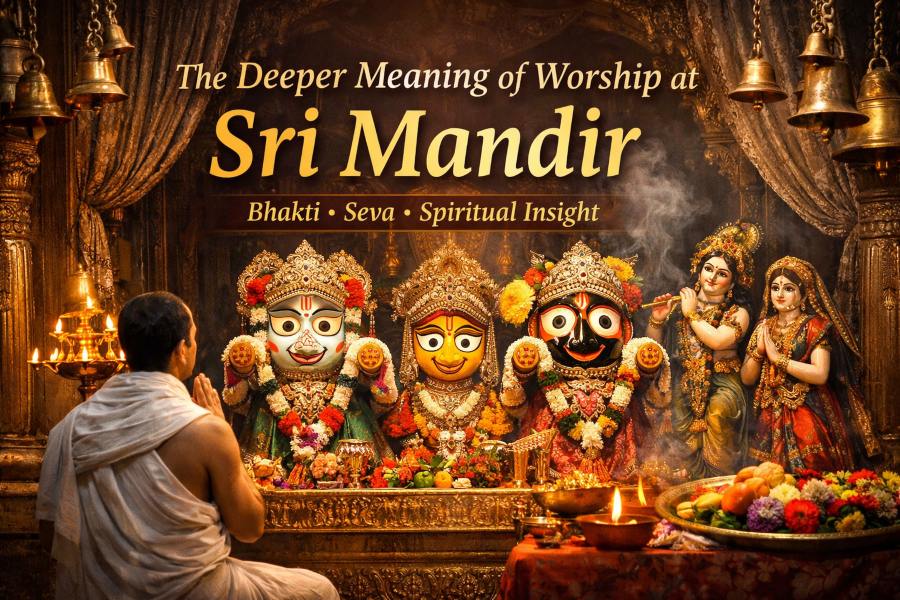
The Deeper Meaning of Worship at Sri Mandir
Worship at Sri Mandir is far more than a ritualistic act performed at fixed hours of the day. It is a living spiritual process that connects the human soul with divine consciousness through intention, purity, and surrender. For centuries, devotees have entered the sacred space of the mandir not merely to ask for blessings, but to experience transformation. Those who seek deeper understanding often turn to a spiritual book about Jagannath, which reveals how temple worship is designed to awaken devotion, humility, and self-realization rather than material desire alone.
At its core, Sri Mandir worship represents a dialogue between the devotee and the Divine. Every sound of the bell, every offering of flowers, and every whispered prayer carries symbolic meaning that goes beyond surface tradition. Understanding this deeper meaning allows worship to become a powerful spiritual discipline rather than a habitual routine.
Sri Mandir as a Sacred Bridge Between the Human and the Divine
The Sri Mandir is not simply a physical structure of stone and sculpture. It is a spiritual bridge where the unseen meets the seen. Traditional scriptures describe the mandir as a place where divine energy is consciously invoked and sustained through daily worship practices. This makes the mandir a living spiritual field rather than a symbolic monument.
When a devotee steps into the mandir, they symbolically leave behind worldly identity. The act of removing footwear represents the shedding of ego and material attachment. The calm atmosphere prepares the mind to receive divine awareness. In this sacred space, worship becomes a process of inner alignment rather than external performance.
The Philosophy Behind Murti Worship
One of the most misunderstood aspects of Sri Mandir worship is murti seva, or deity worship. Critics often view it as idol worship, but within the tradition, the murti is understood as a consecrated form through which divine consciousness becomes accessible to human senses.
The murti serves as a focal point for devotion. Human beings naturally relate through form, emotion, and presence. The deity form allows devotees to express love, surrender, gratitude, and trust. Over time, this relationship refines the heart and trains the mind to focus on higher reality rather than fleeting distractions.
Daily Rituals and Their Inner Meaning
Every ritual performed at Sri Mandir carries layered meaning. Mangala arati, offered in the early morning hours, symbolizes awakening spiritual consciousness. It teaches devotees that devotion should be the first activity of the day, setting the tone for purity and discipline.
Offering bhoga represents acknowledging that all nourishment comes from the Divine. By offering food before consuming it, devotees cultivate gratitude and restraint. Receiving prasadam then becomes an act of grace rather than indulgence.
Even circumambulation around the deity reflects the understanding that divine presence should remain the center of life, with all activities revolving around spiritual purpose.
Bhakti: The Emotional Core of Sri Mandir Worship
Bhakti, or loving devotion, is the emotional foundation of Sri Mandir worship. Unlike fear-based or obligation-driven practices, bhakti encourages a personal, heartfelt connection with the Divine. Devotees are taught to approach God not as a distant authority, but as a loving protector, guide, and companion.
This emotional engagement softens the heart and gradually dissolves anger, pride, and resentment. Through kirtan, prayer, and remembrance, worship becomes an expression of love rather than duty. Over time, bhakti transforms the devotee’s inner world, bringing peace and emotional stability.
Seva: Worship Expressed Through Action
Sri Mandir worship does not end with prayer; it extends into seva, or selfless service. Cleaning the temple floor, preparing offerings, assisting pilgrims, or supporting spiritual activities are all considered acts of worship. This understanding redefines spirituality as active participation rather than passive devotion.
Seva purifies intention by removing the desire for recognition or reward. When service is offered without expectation, it becomes a tool for dissolving ego. In this way, seva complements bhakti, grounding spiritual emotion into practical discipline.
Discipline as a Path to Inner Freedom
Worship at Sri Mandir follows a strict rhythm of cleanliness, punctuality, and order. Far from being restrictive, this discipline trains the mind to overcome laziness and distraction. Regular worship creates consistency, which is essential for spiritual growth.
By aligning daily life with sacred routines, devotees learn to carry awareness beyond the mandir walls. Discipline gradually transforms into inner freedom, as the mind becomes less reactive and more centered.
Read Also: Spiritual Books and Indian Culture
The Role of Sound and Chanting
Sound plays a vital role in Sri Mandir worship. Bells, conch shells, and sacred chants are not decorative elements; they are tools for shifting consciousness. Chanting sacred names purifies mental patterns and redirects attention from anxiety to devotion.
Kirtan, in particular, allows collective participation in worship. The shared rhythm and melody dissolve personal boundaries, creating a sense of unity and spiritual upliftment. Sound becomes a bridge that carries devotion from the lips to the heart.
Worship as a Tool for Emotional Healing
Many devotees experience Sri Mandir worship as a source of emotional healing. The structured environment, devotional music, and sacred presence create a space where inner burdens feel lighter. Surrendering worries during prayer allows emotional release and mental clarity.
This healing effect is not accidental. Traditional worship is designed to calm the nervous system and cultivate trust in divine guidance. Over time, devotees learn to face challenges with resilience rather than fear.
Community and Collective Consciousness
Sri Mandir worship is rarely solitary. It thrives within community. Collective prayer strengthens faith and reminds individuals that spiritual growth is supported by shared values. Serving and worshiping together builds humility, patience, and mutual respect.
This sense of belonging reduces isolation and reinforces ethical conduct. The mandir becomes a moral anchor where values are lived, not merely taught.
Worship Beyond Ritual: A Way of Life
The deeper meaning of worship at Sri Mandir lies in its ability to shape daily life. True worship continues outside the temple through honesty, compassion, restraint, and service. The goal is not perfection, but sincere effort aligned with spiritual values.
When worship is understood in this holistic way, it transforms from an event into a lifestyle. Every action becomes an offering, every challenge an opportunity for surrender.
Conclusion: The Transformative Power of Sri Mandir Worship
Worship at Sri Mandir is a complete spiritual system designed to elevate the human soul. Through ritual, devotion, service, and discipline, it guides devotees toward inner purity and higher awareness. Its deeper meaning lies not in outward practice, but in inner transformation.
By approaching worship with understanding and sincerity, devotees move beyond routine into realization. Sri Mandir worship teaches that true spirituality is lived through love, humility, and conscious action—making the mandir not just a sacred place, but a gateway to a sacred life.